Acrylic vs PETG: Differences, Applications, and How to Choose
Introduction
Acrylic (PMMA) and PETG are the two dominant transparent thermoplastics in the commercial display sector and are frequently compared by purchasers. While both offer excellent transparency, they differ significantly in their performance characteristics: Acrylic is renowned for its superior light transmission (92%) and crystal-like luster, making it the aesthetic choice for high-end displays; PETG excels in toughness and impact resistance, offering greater processing flexibility. Material selection goes beyond mere transparency; it directly impacts the finished product's visual quality, durability, manufacturing complexity, and final cost. This section outlines the key differences between the two, helping you ensure that your display stands or packaging accurately convey your brand identity while delivering the best return on investment.
What Is Acrylic?&Key Characteristics of Acrylic
Acrylic, chemically known as polymethyl methacrylate (PMMA), is an important thermoplastic that was developed relatively early. As a high-performance transparent material, PMMA is often considered the best alternative to glass. It boasts a light transmittance of up to 92%, excellent optical transparency, and a high gloss comparable to a mirror. In addition to its superior visual performance, acrylic also has good UV resistance and does not easily yellow or become brittle with long-term outdoor use. Furthermore, it is lightweight, weighing only half as much as ordinary glass, and is easy to cut, engrave, and heat-bend, making it widely used in advertising light boxes, architectural lighting, and high-end display props.
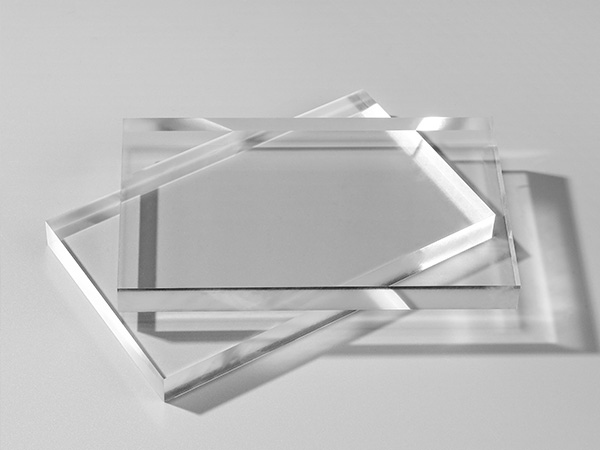
Thanks to its high light transmittance of 92% and excellent optical transparency, acrylic has become the preferred material for cosmetic and retail displays. It can reproduce the color and texture of lipsticks and skincare products without distortion, like crystal, giving the merchandise a sophisticated "floating focus" visual effect on display stands, directly stimulating consumer decisions.
For acrylic boxes, their lightweight and UV-resistant properties facilitate daily handling and restocking, while also preventing yellowing and brittleness from prolonged exposure to sunlight in window displays or outdoor exhibitions, providing long-lasting, clean, and dust-proof protection for collectibles or high-priced items.
In the production of sign holders and various retail displays, the ease of processing is maximized: through laser cutting, heat bending, and screen printing, irregularly shaped structures, seamless splicing, and customized brand logos can be quickly achieved, balancing a high-gloss modern aesthetic with the practical efficiency of modular installation, perfectly adapting to the diverse display needs of pop-up stores, supermarket shelves, and department store counters.
Overall, acrylic combines the visual appeal of glass with the lightweight properties of plastic, providing comprehensive display solutions for all scenarios, from high-end beauty product displays to everyday retail signage.
What Is PETG?&Key Characteristics of PETG
PETG (Glycol-modified Polyethylene Terephthalate) is a transparent engineering plastic that combines aesthetic appeal with toughness, often regarded as a "flexible" alternative to acrylic. As a modified version of PET, it incorporates glycol to overcome the processing difficulties associated with traditional polyesters; it retains glass-like transparency while offering the impact resistance characteristic of plastics. PETG’s standout feature is its exceptional toughness—unlike brittle acrylic, it does not easily shatter upon impact, making it ideal for applications where safety is a priority. Additionally, it boasts excellent thermoformability; it becomes highly ductile when heated, allowing for easy vacuum forming and complex bending without the stress whitening often seen during processing. Furthermore, PETG complies with strict food-contact safety standards and offers good chemical resistance. Although its surface hardness is slightly lower than that of acrylic (making it more prone to fine scratches), PETG often outperforms PMMA in applications such as 3D blister packaging, complex curved displays, and logistics scenarios requiring high impact resistance.
How to choose between Acrylic and PETG
Acrylic vs PETG: Key Differences
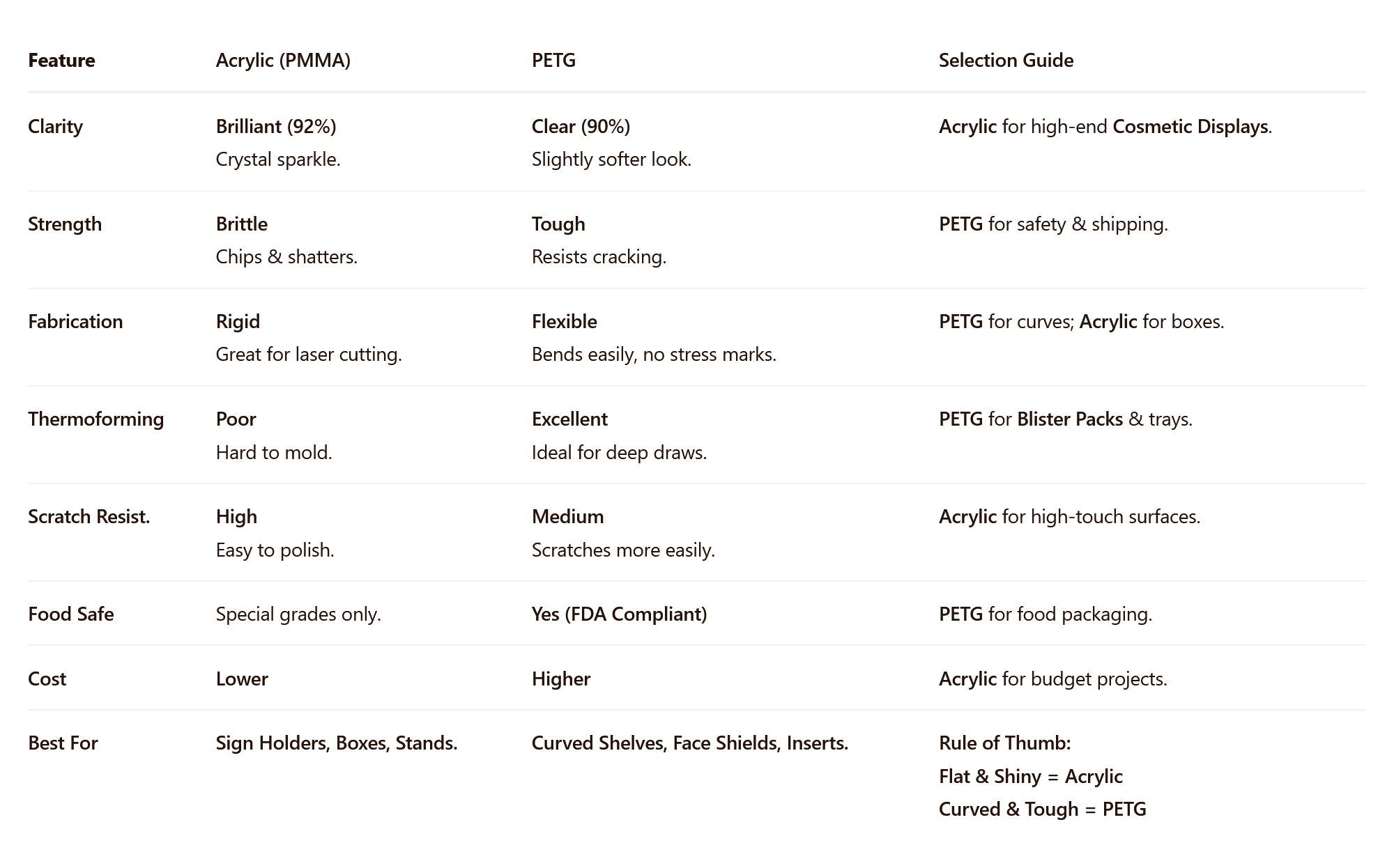
If you need high-gloss, crystal-clear display stands, signage, or acrylic boxes with surfaces that are easily touched or wiped, choose acrylic—it's harder, shinier, and offers better value. If your needs involve vacuum forming, complexly bent packaging trays, protective face shields, or curved shelves, or if your products require frequent transport and impact resistance, choose PETG—it won't break as easily as acrylic, and it won't develop unsightly "whitening" stress lines during processing.
FAQ
1.What is the best material for cosmetic and retail displays?
2.Can acrylic display products be customized with logos and branding?
3.What is the MOQ for custom acrylic products?
3.How do I choose a reliable acrylic products supplier?