Acrylic vs Glass: Which Material Is Better for Custom Display Products?
Introduction
Why are more and more brands choosing acrylic over glass? The answer is simple: while maintaining top-notch visual appeal, it's safer, lighter, and easier to process. Although both are comparable in transparency, the fragility and high installation costs of glass in a real-world retail environment often deter consumers. Making the optimal decision is crucial when faced with diverse display needs, such as display stands and acrylic boxes. This guide will clarify the core differences between acrylic and glass and provide professional material selection advice for different application scenarios, helping you avoid purchasing pitfalls and create the perfect visual merchandising solution.
What Is Acrylic?&Key Characteristics of Acrylic
Acrylic, chemically known as polymethyl methacrylate (PMMA), is an important thermoplastic that was developed relatively early. As a high-performance transparent material, PMMA is often considered the best alternative to glass. It boasts a light transmittance of up to 92%, excellent optical transparency, and a high gloss comparable to a mirror. In addition to its superior visual performance, acrylic also has good UV resistance and does not easily yellow or become brittle with long-term outdoor use. Furthermore, it is lightweight, weighing only half as much as ordinary glass, and is easy to cut, engrave, and heat-bend, making it widely used in advertising light boxes, architectural lighting, and high-end display props.

Thanks to its high light transmittance of 92% and excellent optical transparency, acrylic has become the preferred material for cosmetic and retail displays. It can reproduce the color and texture of lipsticks and skincare products without distortion, like crystal, giving the merchandise a sophisticated "floating focus" visual effect on display stands, directly stimulating consumer decisions.
For acrylic boxes, their lightweight and UV-resistant properties facilitate daily handling and restocking, while also preventing yellowing and brittleness from prolonged exposure to sunlight in window displays or outdoor exhibitions, providing long-lasting, clean, and dust-proof protection for collectibles or high-priced items.
In the production of sign holders and various retail displays, the ease of processing is maximized: through laser cutting, heat bending, and screen printing, irregularly shaped structures, seamless splicing, and customized brand logos can be quickly achieved, balancing a high-gloss modern aesthetic with the practical efficiency of modular installation, perfectly adapting to the diverse display needs of pop-up stores, supermarket shelves, and department store counters.
Overall, acrylic combines the visual appeal of glass with the lightweight properties of plastic, providing comprehensive display solutions for all scenarios, from high-end beauty product displays to everyday retail signage.
What Is Glass?&Key Characteristics of Glass
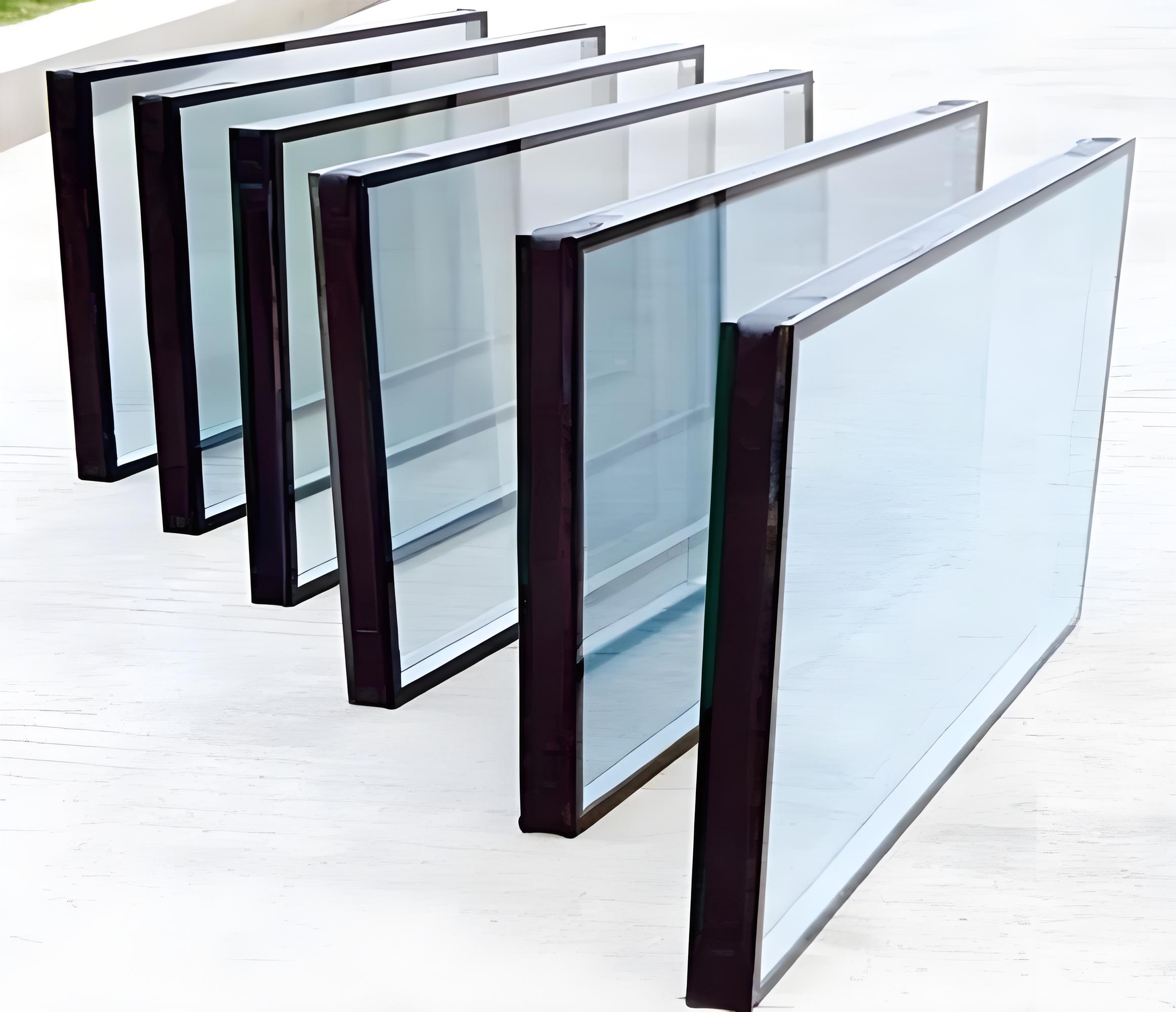
In the fields of commercial display and architecture, glass remains a crucial benchmark for evaluating the quality of transparent materials. The three most commonly used types of glass in commercial applications each have their own characteristics: float glass, with its smooth and clean surface, forms the basis of standard windows; tempered glass, after heat treatment, has significantly increased strength and breaks into blunt-angled fragments, often used for display surfaces where safety is paramount; laminated glass, with PVB film sandwiched between multiple layers of glass, will not scatter even if damaged, and is frequently used in high-end shop windows or ceilings. The core advantages of glass lie in its excellent scratch resistance and high rigidity, combined with its naturally sophisticated appearance, giving a space a sense of stability and luxury. However, buyers must consider its significant drawbacks: ordinary glass has poor impact resistance and is relatively heavy, which not only increases the difficulty of transportation and installation but also poses safety hazards in high-traffic retail environments.
How to choose between Acrylic and Glass
Acrylic (PMMA) vs. Glass
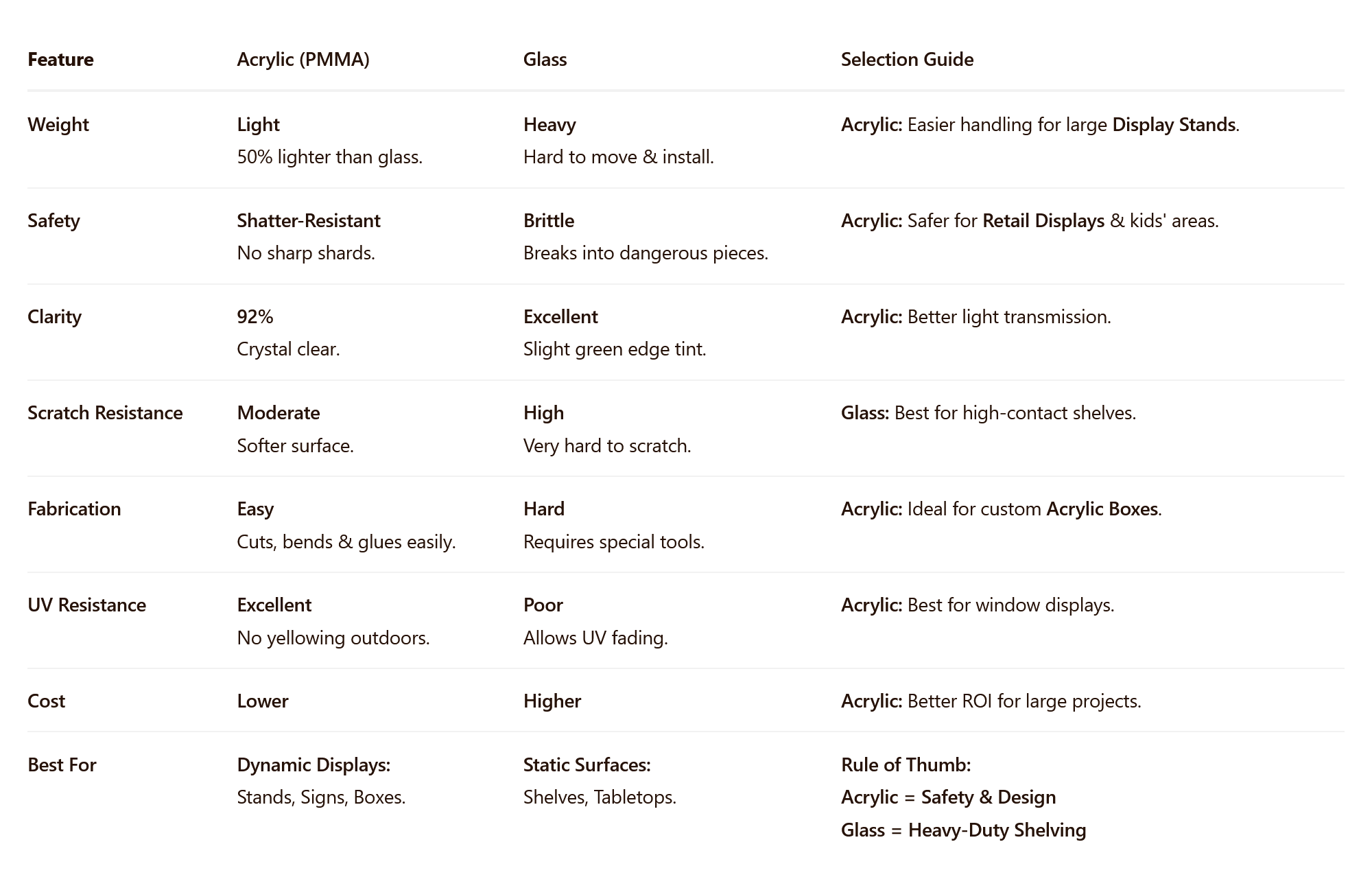
Ultimately, glass excels in its "rigidity," while acrylic (PMMA) wins in its "flexibility and safety." While glass performs exceptionally well in terms of scratch resistance, its heavy weight and fragility significantly limit its flexibility in modern retail displays. In contrast, acrylic achieves higher light transmittance at half the weight and does not shatter into deadly sharp fragments upon impact, making it ideal for dynamic display props such as display stands, sign holders, and acrylic boxes. If you need a display solution that is easy to install, versatile in design, and minimizes safety risks, acrylic is undoubtedly a wiser business choice than glass.
FAQ
1.Is acrylic cheaper than glass?
2.Which material is safer for retail displays?
3.How do I choose the right material for my project?
4.How do I choose a custom acrylic manufacturer?