The Difference Between UV-Resistant Acrylic and Standard Acrylic: Which One Should You Choose?
Introduction
Most buyers know acrylic for being crystal clear, lightweight, and easy to fabricate, yet few realize that not all acrylic sheets offer the same UV protection. Choosing the wrong grade can quickly lead to yellowing, reduced transparency, brittleness, and a drastically shorter service life, especially in outdoor settings. This guide explains the key differences between UV-resistant and standard acrylic, helping you secure the right material to keep your indoor and outdoor displays looking pristine for years.
Characteristics of Standard Acrylic&Limitations of Standard Acrylic
Standard acrylic is the industry workhorse for interior visual merchandising, widely specified for indoor displays, retail fixtures, signage, and product showcases. It remains popular due to its excellent transparency (up to 92%), affordable price point, easy processing via laser cutting or heat bending, and a naturally good surface finish that delivers a high-gloss, glass-like appearance.
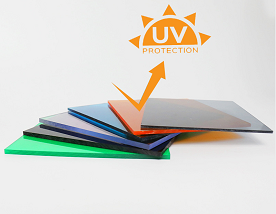
While ideal for protected indoor environments, standard acrylic typically does not include enhanced UV stabilizers. When subjected to prolonged sunlight, outdoor weather, or strong UV radiation, lower-grade standard acrylic may experience faster aging. This degradation can manifest as yellowing and a noticeable drop in transparency, a loss of mechanical properties leading to increased brittleness, and general surface aging such as haze or micro-cracks—all of which compromise the aesthetic and structural integrity of the display over time.
How UV-Resistant Acrylic Works&Key Benefits of UV-Resistant Acrylic
Unlike standard formulations, UV-resistant acrylic incorporates advanced additives or co-extruded layers specifically engineered to absorb and block harmful ultraviolet radiation. By intercepting UV rays before they penetrate the material, these stabilizers actively protect the polymer structure from breaking down. This scientific approach effectively slows the degradation process, preserving the sheet’s molecular integrity and ensuring the material maintains its optical clarity and physical strength even under intense environmental stress. transportation and installation but also poses safety hazards in high-traffic retail environments.
The primary advantage of UV-resistant acrylic is its superior outdoor durability, making it the definitive choice for outdoor signs, architectural applications, and exterior displays. It offers exceptional color stability, significantly reducing the risk of yellowing while maintaining high transparency over years of sun exposure. This ensures a consistently premium appearance, which is why it is the preferred material for brand-critical environments such as luxury retail spaces and permanent installations, where maintaining a flawless, high-end image is non-negotiable.
How to choose between Standard Acrylic and UV-Resistant Acrylic
Standard Acrylic vs. UV-Resistant Acrylic
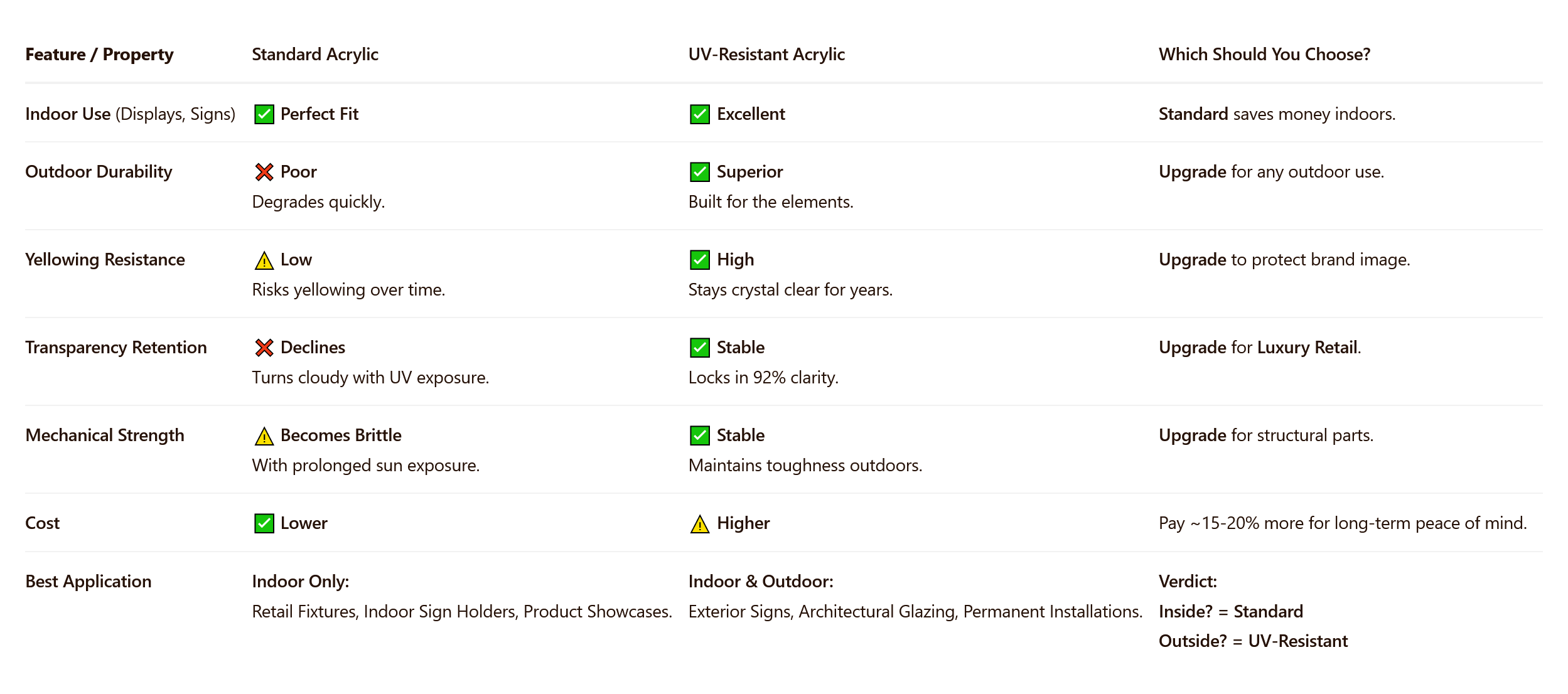
To summarize: Standard Acrylic is the undisputed champion for indoor applications, offering unbeatable value for Retail Displays and Sign Holders inside shopping malls and boutiques. However, the moment your installation faces direct or indirect sunlight—such as storefront windows, architectural glazing, or outdoor kiosks—UV-Resistant Acrylic becomes the mandatory choice. It costs slightly more upfront but saves you from the embarrassment and expense of replacing yellowed, brittle displays later. Protect your brand’s image: use standard acrylic indoors, and always upgrade to UV-resistant acrylic for the outdoors.
FAQ
1.Why acrylic is safer and lighter for retail?
2.When to use industrial PC instead of display acrylic?