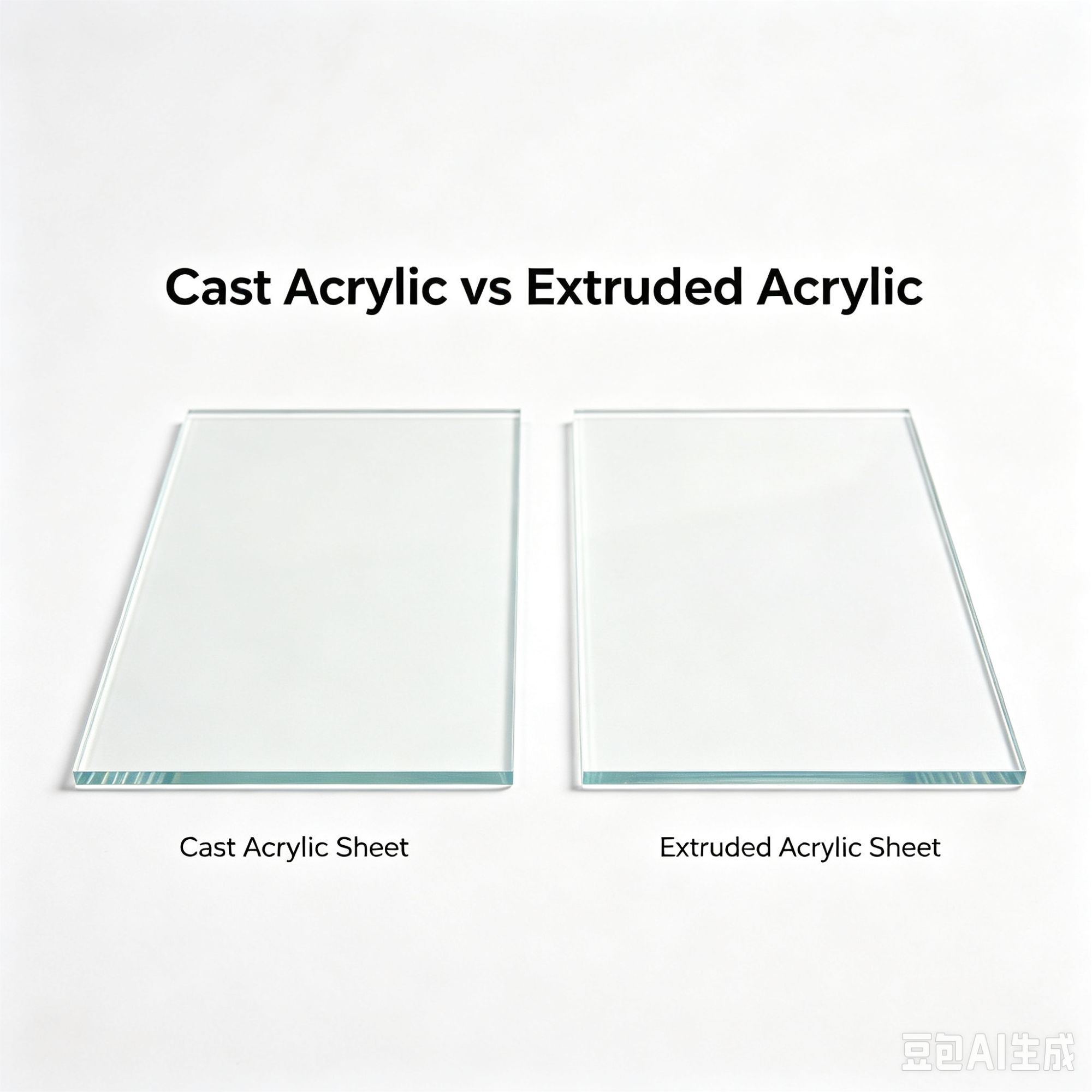
Cast Acrylic vs Extruded Acrylic: What's the Difference and Which Should You Choose?
Introduction
When purchasing acrylic sheets or customizing acrylic display racks, many people find that prices from different suppliers can vary significantly even for the same transparent acrylic sheet. The price differences are not solely due to sheet thickness, but also to production methods, processing performance, raw material grade, and applicable scenarios.
# Acrylic Classification
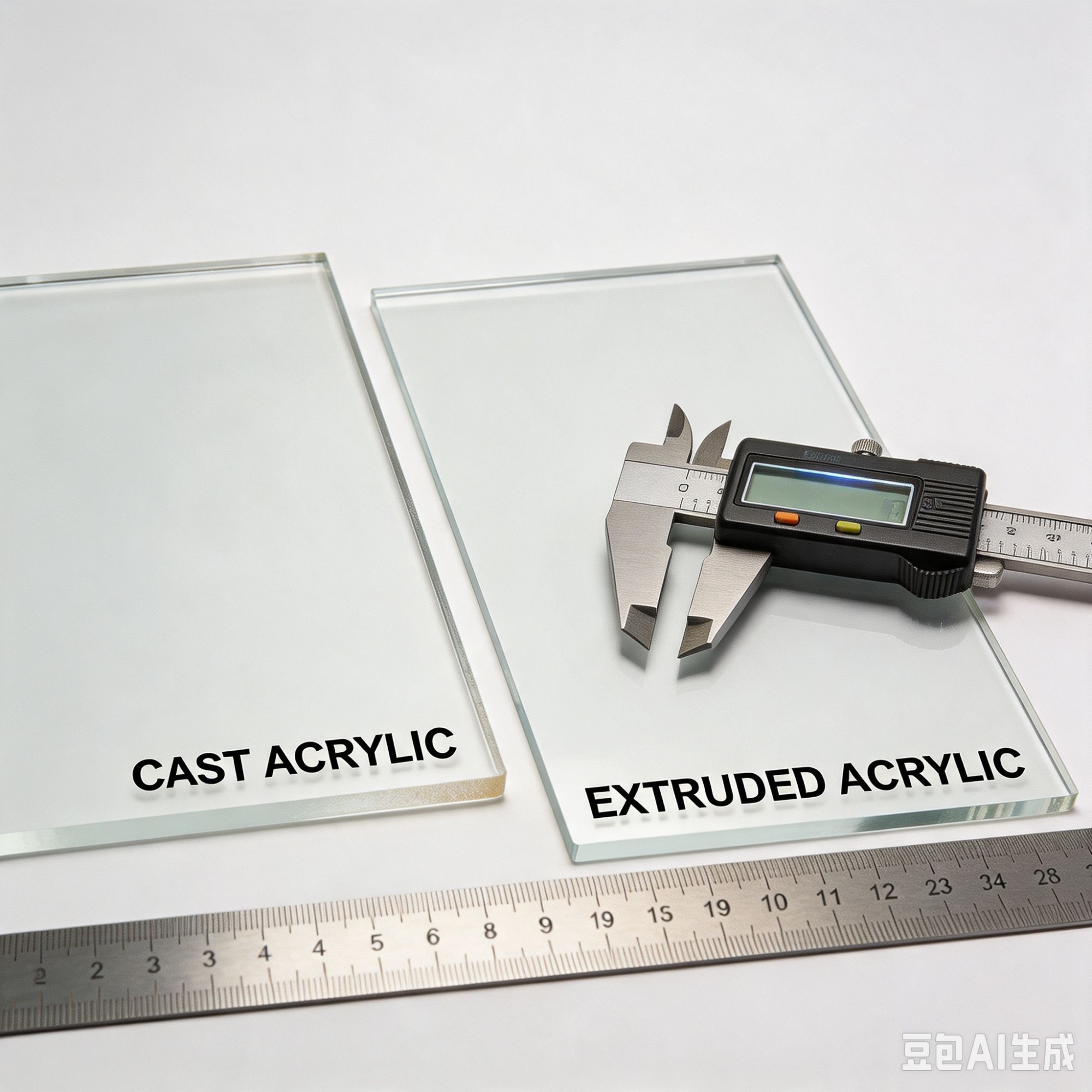
Currently, common acrylic sheets are primarily categorized into cast acrylic sheets and extruded acrylic sheets. Rather than one being universally superior, each offers distinct advantages tailored to specific applications. Cast acrylic boasts exceptional optical clarity, superior surface hardness, and excellent chemical resistance, making it ideal for high-end displays, precision lenses, and artistic signage where finish quality is paramount. Conversely, extruded acrylic provides greater dimensional stability, higher impact strength, and more consistent thickness at a lower production cost, positioning it as the preferred choice for mass-produced items like glazing panels, light diffusers, and retail shelving. Ultimately, the optimal selection hinges on balancing performance requirements—such as machinability versus budget constraints—against the intended end-use of the product.
What are the differences between cast and extruded acrylic sheets?
Cast acrylic sheets are made by injecting liquid raw materials into a mold or between glass plates, then polymerizing and curing to form the sheet. It offers more options for thicker sheets, special colors, and complex processing, making it suitable for engraving, CNC machining, chamfering, and high-transparency components.
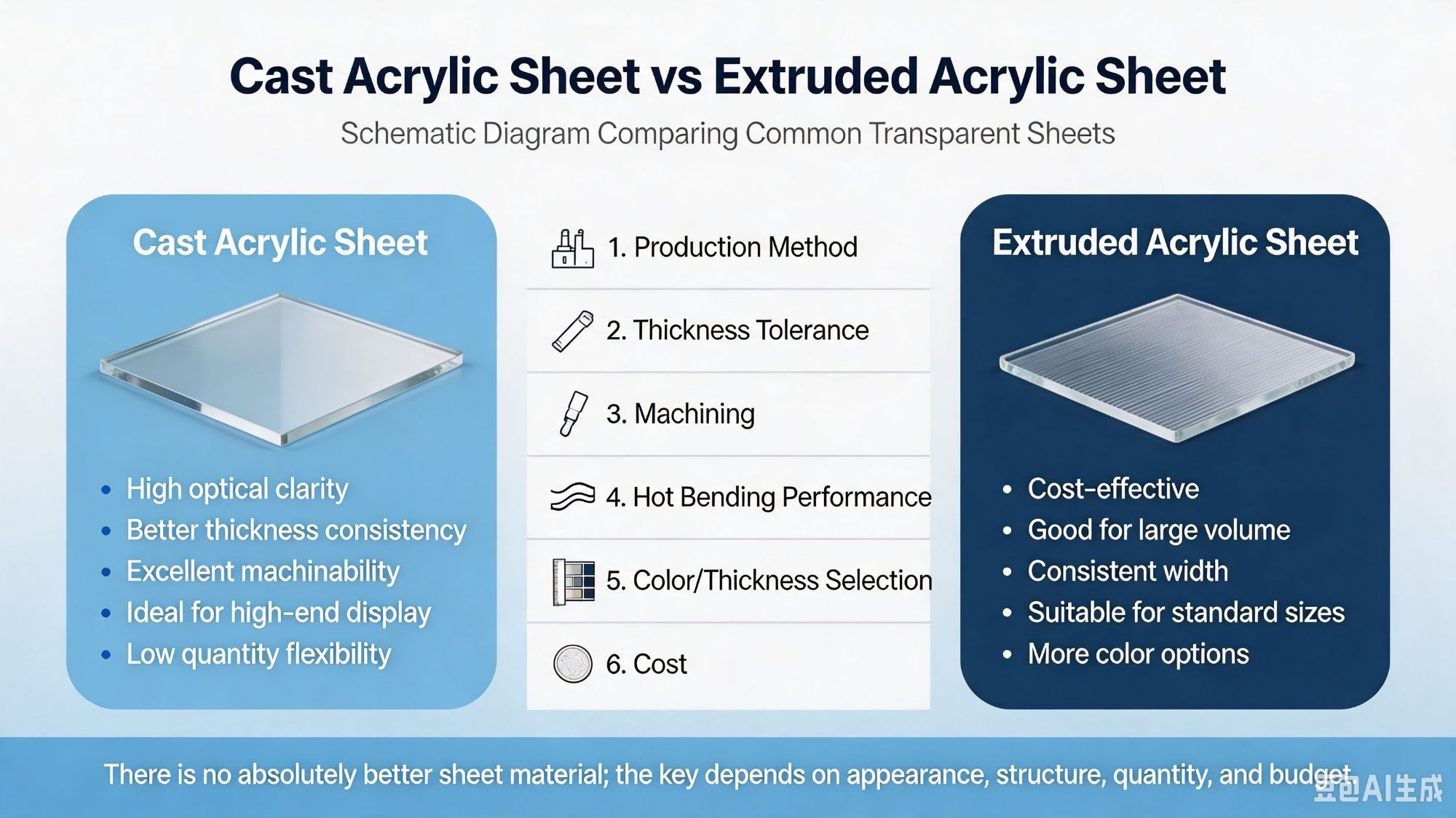
Extruded acrylic sheets, on the other hand, are made by heating and melting raw materials and then continuously extruding them into shape. Its thickness control is generally more stable, and production efficiency is higher, making it more suitable for standardized, high-volume, and relatively simple products.
In short,Cast plates are better suited for complex machining, high-end appearance, and thick plate structures;Extruded plates are better suited for simple hot bending, standardized parts, and mass production.
# Why is there such a large price difference between the two types of acrylic sheets?
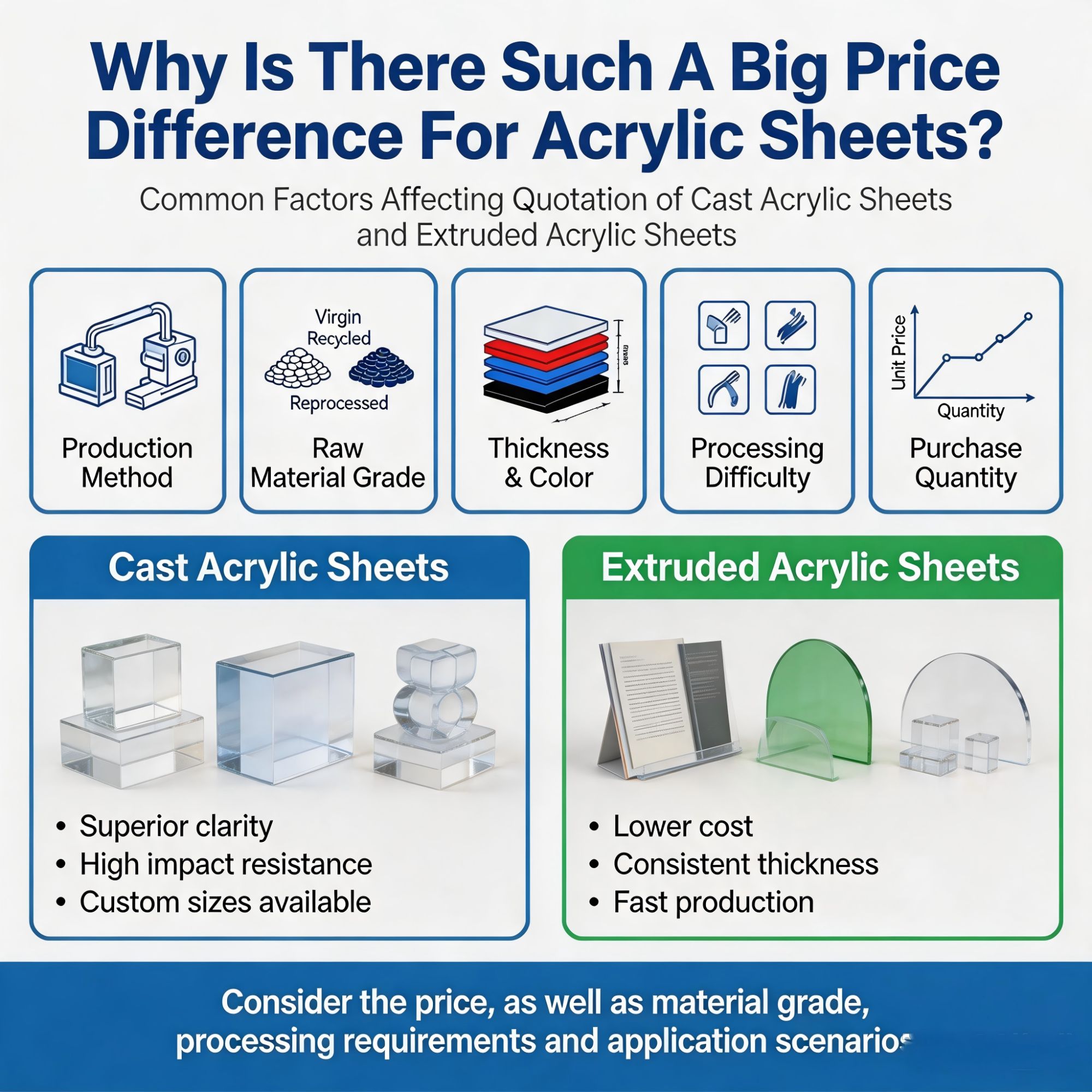
First, the production methods differ. Cast acrylic sheets have a relatively longer production cycle and offer a wider range of colors and thicknesses; extruded acrylic sheets are produced through continuous manufacturing, making it easier to control material costs and production efficiency.
Second, the processing performance differs. Cast acrylic sheets are more suitable for complex engraving and machining, while extruded acrylic sheets require stricter temperature and speed control during processing to prevent edge melting or localized deformation.
Third, the sheet grade differs. Even among cast acrylic sheets, the use of virgin or recycled materials, transparency, surface impurities, and batch color consistency all affect the price.
Fourth, the purchase quantity differs. Standard sizes and bulk purchases tend to lower the unit price; special colors, thicknesses, or small-batch customization usually result in higher costs.
Therefore, the price difference of acrylic sheets cannot be determined solely by whether they are "cast" or "extruded"; it must be considered in conjunction with the raw material grade, thickness, color, brand, and processing requirements.
How to Choose Display Racks?
For high-end cosmetic display racks, thick illuminated wine stands, complex engravings, and highly transparent components, cast acrylic sheets are the preferred choice.For simple, high-volume countertop promotional racks, price tag trays, small brackets, and standardized hot-bent parts, extruded acrylic sheets can be selected based on specific requirements.
For large floor-standing display racks, small appliance display racks, or structures requiring long-term load-bearing capacity, simply changing the sheet material or increasing its thickness is insufficient; shelf span, support positions, metal frame, and connection methods must also be considered.A single display rack doesn't necessarily have to be made of only one material. In actual production, cast acrylic sheets can be used for main exterior components and complex machined parts, while extruded acrylic sheets can be used for internal partitions or standardized components, thus balancing display effect, structural stability, and cost.
What information should be confirmed during procurement?
When requesting a quote from a supplier, it is recommended to clarify the following:
Whether cast or extruded acrylic sheets will be used;
Sheet thickness and color;
Whether virgin material will be used;
Main processing method;
Show the weight and quantity of the product;
Whether the sample and bulk order use the same material;
Whether long-term heavy-duty load-bearing or outdoor use is required.
There is no absolutely better choice between cast and extruded acrylic sheets. Truly reasonable material selection should be determined based on the product's appearance, processing technology, structural load-bearing capacity, purchase quantity, usage period, and budget. Comparing only the unit price of the sheet easily overlooks subsequent processing, rework, and usage costs.